
 03 9102 1452
The Experts You Can Trust for Long-Lasting Repairs

- Fast and Reliable Service

- Licensed & Insured Professionals

- No-Obligation Quotes
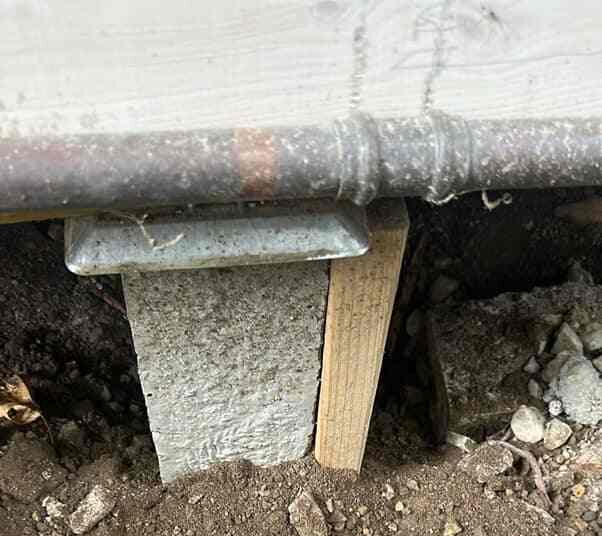
If your home starts to show the telltale signs of stump deterioration, such as uneven floors or visible cracks along internal walls, the question isn’t just if you should act, but when.
Some homeowners think that replacing a handful of stumps should solve the problem. In many cases it will, but in other cases a partial repair will only be a short-term band-aid that leaves other structural issues waiting to strike.
Knowing the difference between a targeted repair with partial restumping, and a full restumping of your home comes down to the condition of the whole subfloor, not just of the few stumps that are visibly failing.
During this article, we will break down when a partial house restumping makes sense and when it falls short. We’ll also cover the decision making process you should go and when to arrange a professional inspection..
What Is Partial Restumping and When Is It Used?
Partial restumping, or partial reblocking, is the replacement of a few failing or damaged foundation supports beneath your home. It leaves all the healthy stumps in place. This helps stabilise parts of a home that have begun to subside.
It is a cost-effective way to support a home. A full restumping costs far more than a partial restumping, and people on a tight budget can repair damage within their means.
Partial restumping is effective when it’s only a specific room or corner of the house that is impacted. If one corner is sinking, and the doors are jamming only in that corner, a full restumping is often not required.
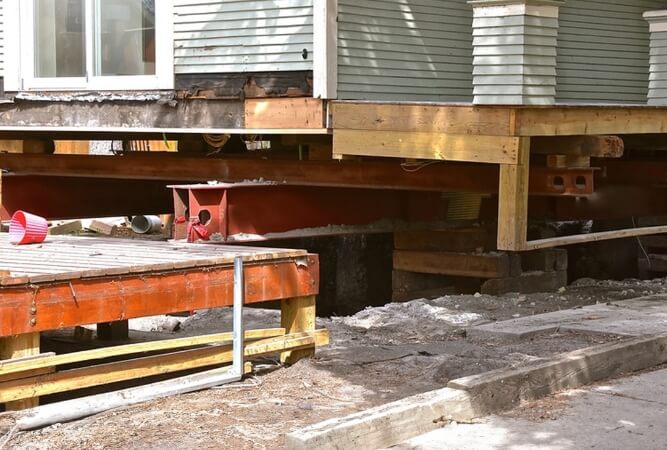
Important Considerations Before Choosing a Partial Restumping
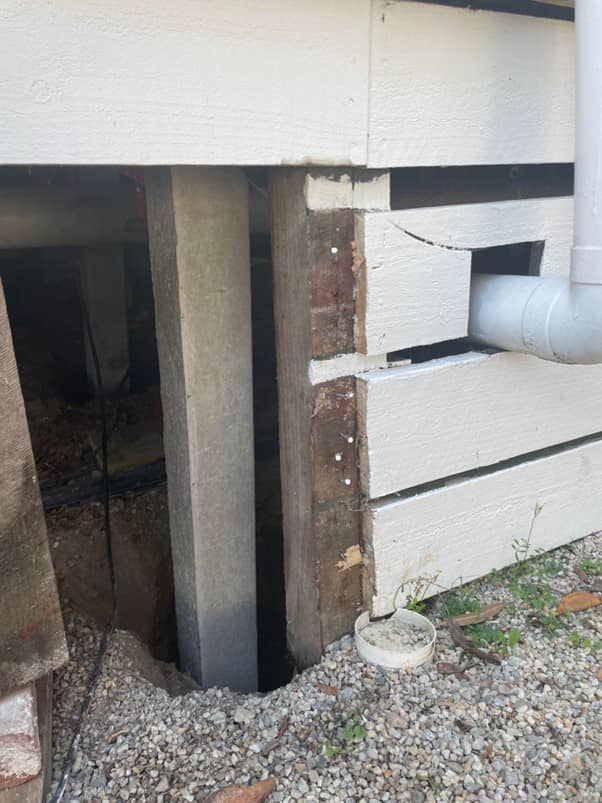
- Deceptive Appearances. While it may look like only a few stumps are rotten or sagging, other stumps may also be suffering. Timber stumps can often look fine above ground, while below they could be rotted by dampness, or being eaten by termites.
- Future Work. While replacing a few stumps may fix the problem now, if you know that more work will be needed, if you’re looking at renovations in the future, it is often a good idea to get the full work done now. One full restumping costs less than many partial restumpings.
Signs That Replacing a Few Stumps Won’t Be Enough
You may have noticed cracks in the wall, or a window sticking, in just one room, so you assume a partial restumping under that part of your home would be enough. However, there could be some substantial foundation shift going on, which so far has only impacted a small space. So how would you know if a bigger restumping effort is required? There are some signs to be aware of that indicate more work needs to be done with your foundation.
1. Expanding Wall Cracks
Minor settling causes small cracks in the wall, however significant foundation movement will create larger cracks in your walls. Stepped cracks along the brickwork or cracks radiating from doorways are signs that a partial stump replacement will probably not be enough.The load is no longer evenly distributed across all of your stumps.
2. Sloping or Bouncy Floors
An issue with stumps in one corner of the house won’t feel like much, but if there is a larger problem beneath the house, you will notice much more of a slope through more rooms. If floors feel spongy or bouncy as you walk through them, this can indicate the joists and bearers are losing support.
3. Misaligned Doors and Windows
If doors and windows are difficult to open, or are sticking shut, on multiple rooms in your house, then a large part of your home is being warped, which could indicate a large section of your foundations have sunk, more than a partial restumping will fix.
4. Visible Gaps and Sinking
Significant movement of your flooring causes gaps to form between floors and walls, ceilings and cornices. If you also notice sinking from outside your home, this is a good sign that more work than a partial restumping would be required to solve the problem.
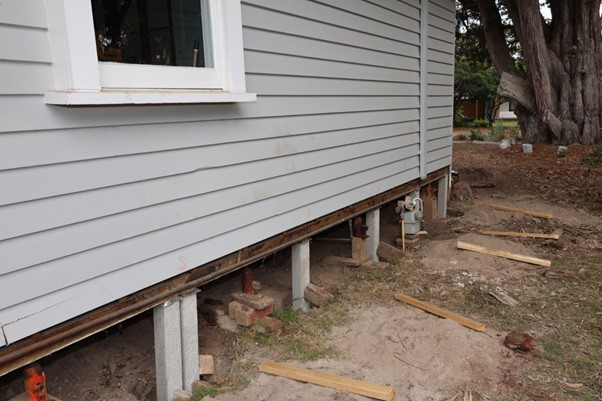
The Case for a Full Restump: What Vic Metro Underpinning Looks For
Professional builders can assess your property to determine the extent of any damage and how large the repair will be. We look beyond cosmetic damage and investigate the condition underfoot, the condition of the soil, if there are any plumbing issues that are soaking the ground and causing foundations to sink.
Here is what our team at Vic Metro Underpinning will look for to determine the extent of your stump problem:
- Stump Deterioration. The first thing we check is the physical state of all your stumps, not just the ones that look the most obviously damaged. We check beneath the surface for wood rot, termite damage, or rusting and cracking concrete.
- Sloping Floors. We use a laser level to make absolutely sure of the level of your floors. We also do a marble roll test. If these measures show issues in multiple sections of your house, generally it means more than a partial restumping.
- Sticking Doors and Windows. We specifically look for binding entryways and windows that need a real hard push to open.
- Wall Cracks. We check all the cracks in your walls. Cracks wider than a few millimetres or cracks radiating away from doors and windows, often point to uneven foundations.
- Soil and Drainage. We check the soil quality around your home. We check for clay soils that shift seasonally with the wet weather. We look for standing water, which indicates a soaked ground, and we look for trees that may have invasive root systems.
Why a Full Restump is Often Recommended
While a partial restump may seem cost-effective to you, we often recommend a full restumping, especially for older homes, for two reasons:
- Chain Reaction. Changing one stump can have an impact on the other stumps. Elevating the house in one spot may then cause the other stumps to fail rapidly, in a chain reaction.
- Better Materials. Newer stumps are made from better materials. Pest-resistant galvanised steel or strong concrete, rather than timber that can rot or fall prey to termites.
Making the Right Call for Your Melbourne Home
Deciding between a partial restumping and a full house restump isn’t always straightforward, and it shouldn’t be a decision made on appearance alone. If your home is in Melbourne’s inner suburbs, the outer east, the Mornington Peninsula, Geelong, Ballarat, or anywhere else across Victoria, a sticking door, a sloping floor in one room, is rarely the whole story. What matters is the condition of every stump beneath your home, the quality of the surrounding soil, and whether the structural load is still being distributed evenly across the subfloor. Getting that assessment right from the start is what separates a lasting repair from one that needs revisiting in a few years. .
At Vic Metro Underpinning, we take the time to properly evaluate your home before recommending any course of action. Our team services Melbourne and the surrounding suburbs, including the Yarra Valley, Dandenong Ranges, Frankston, the Bellarine Peninsula, and regional centres across Victoria. We will give you an honest assessment and a clear explanation of why your property needs a targeted house stump replacement or a full restumping. If partial restumping is the right call, we’ll tell you. And if a full restump is what your home genuinely needs, we’ll show you exactly why.
Our experts provide a FREE Structural Assessment and tailored solutions for wall cracks. Protect your home’s value and stability today.
 Contact Us Before It’s Too Late!
-
 Will House Levelling Fix Cracks in My Walls? What It Can and Can’t DoRead More
 -
 Should You Restump Your Home Before Renovating? Why Order of Work MattersRead More
 -
 House Re-Levelling vs Underpinning vs Restumping: What’s the Difference?Read More
 -
 Do I Need Underpinning? 10 Warning Signs of Foundation ProblemsRead More
 -
 What Is Underpinning? A Simple Guide for Melbourne HomeownersRead More
 -
 Why Am I Getting Cracks In My Wall?Read More
What Are Our Clients Saying About Us?

We just had our '50s weatherboard restumped in Ballarat and what an amazing job. Shnai is an amazing communicator and a pleasure to negotiate details with. The 2 gentlemen workers were just that - very respectful of customer and their… more
Nothing but positives for these guys, Shnai and her contractors provide a second to none service with Shnai being on top of all steps of the process and answering any questions that came up. The group of guys she has… more
I can't thank the team enough for quick turn around whilst I'm preparing to renovate. Shnai was a great happy with all the recommendations provided.
Shnai and the team have been brilliant to work with, and went above and beyond to answer all of my questions and provide great advice on my restumping project. Shnai was very professional and understanding of my concerns, and I… more
Shnai and the professional stumper were both absolutely great. They organised a comprehensive assessment of the property at very short notice. They explained the issues clearly and thoroughly. Very professional.
Thank you for assisting us during our difficult journey. We had a water damage from our water tank which caused us a lot of issues. Shani helped us with the whole process. To the extent of liaising with our insurance… more
The Vic Metro team underpinned my house in Maribynong. They did an excellent job; a professional, efficient and effective team. Was highly impressed with their work and work ethic.
Thank you, Vic Metro team, for helping with our property's restumping. They were incredibly helpful and managed to complete everything within the promised time. Will definitely be recommending to others!!!
Thank you for assisting us with our property. We appreciate you fitting us in such short notice. Shnai was amazing to deal with.
Want to thank all the team at Vic metro for the great job they did. Special mention to Shnai for always answering all my questions and always getting back to me. Great crew who know what they are doing, thanks… more
