
 03 9102 1452
The Experts You Can Trust for Long-Lasting Repairs

- Fast and Reliable Service

- Licensed & Insured Professionals

- No-Obligation Quotes
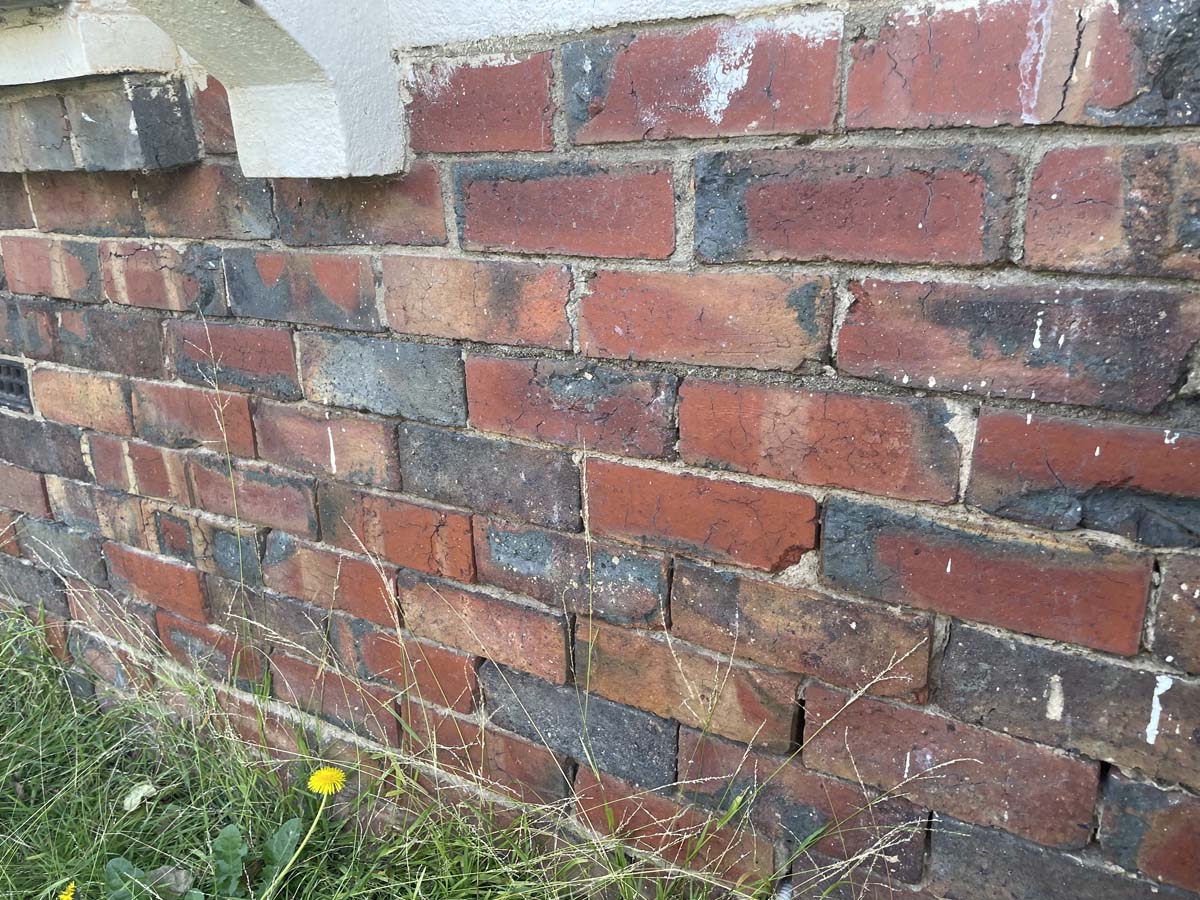
Underpinning is a process of stabilising a house that may be moving on its foundations. This may sound surprising, as you would think a solid house on strong foundations would be fine. However, changes in the environment, particularly with the soil your house is sitting on, can occur.
It is a simple process, relatively speaking, and once the underpinning is done, your house is supported and stable again and safe for many more years to come.
Below, we’ll walk you through the main purpose of underpinning, as well as how to notice the signs that you may need it and how it is done.
What is Underpinning?
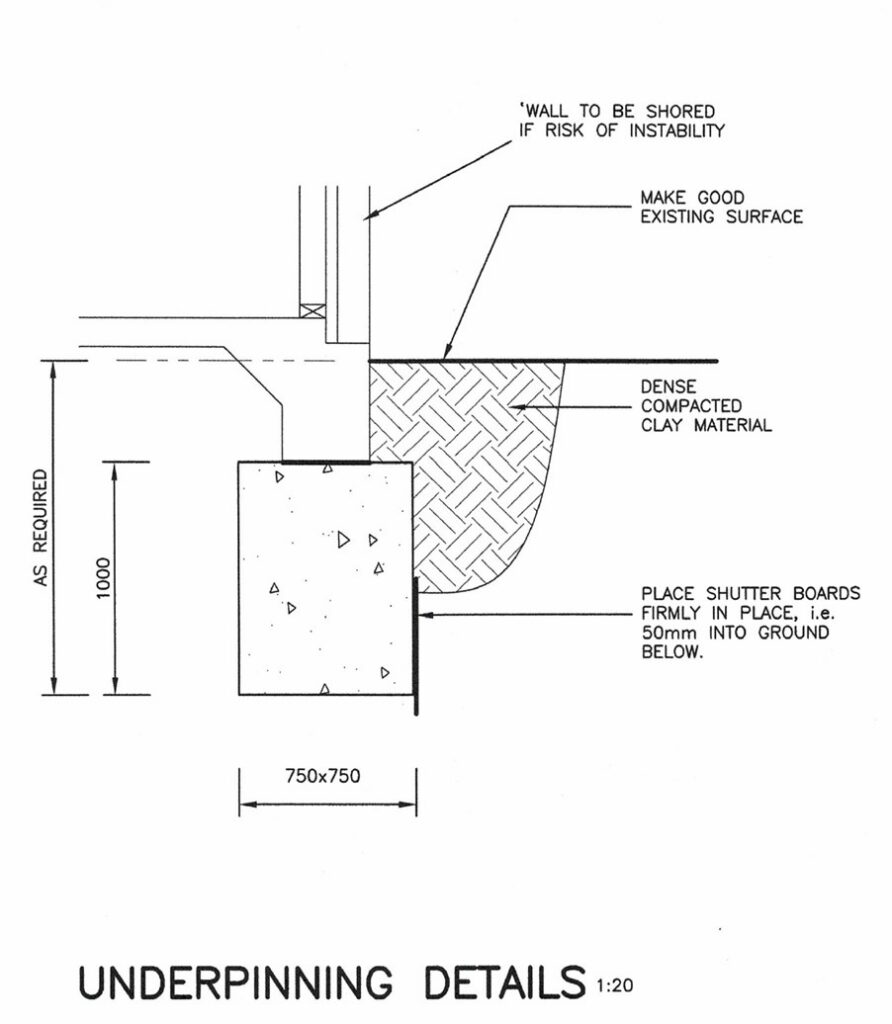
Underpinning is where a house’s existing foundations are strengthened and stabilised by extending them, making them deeper or wider. This helps to improve the load-bearing capability of the foundations which makes your house safe and stable.
Often if a home is being renovated, or another story is being added, underpinning is required as the load of the house will shift and change, or increase. While the soil conditions where your home is was suitable for a single story house, it may not be able to handle the weight of a second story.
Weaker supports are strengthened with new concrete or steel or installing deep piers to reach stable ground further down. This helps prevent any movement or further damage to your home.
Why do I need Underpinning?
You need to underpin your home when your foundations become unstable. There are a few reasons as to why this could happen:
- Soil issues. The most common reasons for the need to underpin your home, soil can shift and move, taking your home on a ride with it. Moisture can impact the soil as well. Too much moisture can have the soil swelling, too little moisture has the soil shrinking. Tree roots can also change the nature of the soil in and around your foundations.
- Nearby construction. Digging next to your home can disrupt your foundations, shaking your home and shifting it a little. The construction can also alter the composition of the soil, which leads to point 1.
- Added weight. Building extensions that may shift the centre of gravity of your home, or adding a storey to your house adds weight to the original foundations.
- Natural Disasters. Floods, earthquakes, sinkholes and the like, can all shift your home through ground movement, which would require underpinning and stabilising of your foundations.
- Inadequate original foundations. Sometimes the original foundations were poorly designed or built. Maybe they were not suitable for the soil conditions.
What Signs to Look for if Your Home Needs Underpinning
There are things you may notice about your home and think – that’s strange. These signs could mean that your house is slipping or unstable, and would need the services of Vic Metro Underpinning and Restumping.
These signs include:
- Cracks in your walls or floor. When foundations move, they don’t move consistently. This can lead to stresses on your walls and flooring. Diagonal cracks, the stepped cracks as brickwork separates, or horizontal cracks as the house widens, are often clear signs of your house moving and shifting on its foundations.
- Doors or windows that stick. If when you’re trying to open doors, they need that extra energy to unstick them, or a shove to close them. The same when opening or closing windows. This shows the house has shifted and the frames around your door and windows have shifted ever so slightly.
- Uneven or sloping floors. Floors that dip or sag or have a definite feeling of ‘downhill’ is a huge hint that foundations are sinking. Rolling a ball along your floors, hardwood floors in particular, can help you see this. Also, walking and sliding your feet along hardwood floors while wearing socks can help you discover these anomalies.
- Gaps or separations. Gaps between the floor and the walls, or the walls and the ceiling can be a sign that something has shifted.
- Leaning walls. If you notice some walls in your home leaning, it could mean your house has shifted. If you have a basement and you notice a bowing in your walls, it may mean your house has dropped and there is stress on those walls struggling to hold your home up.
- Cracking foundation If you notice cracks in the foundations outside your home that is a serious indicator of a problem.
- Water problems. If there is water pooling in your basement or beneath your house, this can be an indication of a change in soil condition, overly saturated soil, which can compromise the foundations of your home.
- Sagging roof. If you notice a dip in your roofline, this can also be an indication that there are problems with your foundation.
- Noticeable change in the soil. If you notice in your yard that the soil is changing, water is pooling, or where there once was grass, there are now dry, bare areas, this could indicate changing soil conditions that extend to under your home and threaten the foundations.
Underpinning – How do we do it?
Step 1: Assessment. For such an important project you need a solid assessment of the situation. An engineer will inspect your home and investigate what is causing the problem. This can help identify what we need to do and how much it will cost you.
Step 2: Council Approval. For underpinning works, generally you need council approval. We will handle this for you, saving you the frustration of administration and red tape.
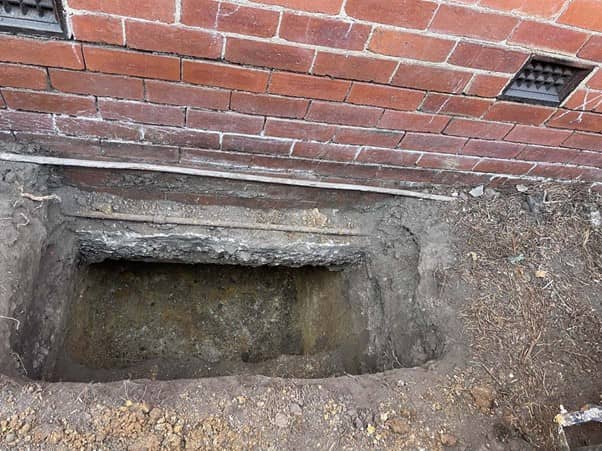
Step 3: What type of underpinning do you need? There are 3 main kinds of underpinning methods that can be used.
- Mass Concrete Underpinning. This is the most common style of underpinning. We dig out sections beneath the existing house footings and fill in with concrete to deepen and strengthen the foundations.
- Resin Injection. This is a more modern method of underpinning. We inject an expanding polyurethane resin into the soil. This compacts and solidifies the soil and helps lift the foundations back up to level.
- Screw pile/Mini-piled underpinning. Steel piles are driven into the ground, or screwed into the ground to help support your home.
Step 4: Cost. Once a method has been discussed and agreed upon, costs are figured out before any work is started. Small underpinning jobs can be as little as $5000 while more complex jobs can range beyond $20,000.
Step 5: Timeframe. We will give you an estimate of how long we believe the job will take. We have a lot of experience underpinning and restumping homes in and around Melbourne. This gives us an advantage in estimating the time it will take.
Step 6: Clean up. Once all the work is done, and your house is back to the straight and level, we clean up the site so it looks like no one was there.
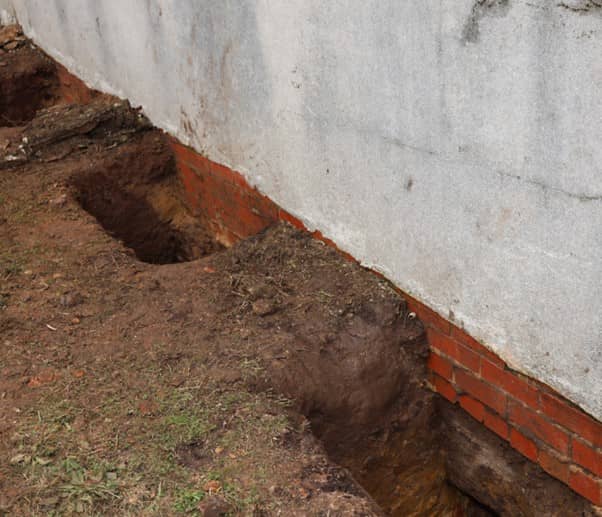
Vic Metro Underpinning and Restumping is a trusted, family owned business operating throughout Melbourne. We’re here to save your family home, to get it back on its feet, rather than demolishing it. Each project we undertake with you is backed by integrity,
There are different kinds of soil around Melbourne. It is a majority of expansive clay-based soil, volcanic in nature. However you have sandier soils near the coastline, like in Brighton and more fertile loam-based soil near the Dandenong Ranges.
We can perform underpinning in Geelong, restumping in Melbourne, or want to arrange an assessment, we’re always here to help! Our team can restore the foundation of your property and put an end to costly structural issues. Reach out to us today to learn more!
Our experts provide a FREE Structural Assessment and tailored solutions for wall cracks. Protect your home’s value and stability today.
 Contact Us Before It’s Too Late!
-
 Full Restump vs Replacing a Few Stumps: When Is Partial Restumping a Bad Idea?Read More
 -
 Will House Levelling Fix Cracks in My Walls? What It Can and Can’t DoRead More
 -
 Should You Restump Your Home Before Renovating? Why Order of Work MattersRead More
 -
 House Re-Levelling vs Underpinning vs Restumping: What’s the Difference?Read More
 -
 Do I Need Underpinning? 10 Warning Signs of Foundation ProblemsRead More
 -
 Why Am I Getting Cracks In My Wall?Read More
What Are Our Clients Saying About Us?

We just had our '50s weatherboard restumped in Ballarat and what an amazing job. Shnai is an amazing communicator and a pleasure to negotiate details with. The 2 gentlemen workers were just that - very respectful of customer and their… more
Nothing but positives for these guys, Shnai and her contractors provide a second to none service with Shnai being on top of all steps of the process and answering any questions that came up. The group of guys she has… more
I can't thank the team enough for quick turn around whilst I'm preparing to renovate. Shnai was a great happy with all the recommendations provided.
Shnai and the team have been brilliant to work with, and went above and beyond to answer all of my questions and provide great advice on my restumping project. Shnai was very professional and understanding of my concerns, and I… more
Shnai and the professional stumper were both absolutely great. They organised a comprehensive assessment of the property at very short notice. They explained the issues clearly and thoroughly. Very professional.
Thank you for assisting us during our difficult journey. We had a water damage from our water tank which caused us a lot of issues. Shani helped us with the whole process. To the extent of liaising with our insurance… more
The Vic Metro team underpinned my house in Maribynong. They did an excellent job; a professional, efficient and effective team. Was highly impressed with their work and work ethic.
Thank you, Vic Metro team, for helping with our property's restumping. They were incredibly helpful and managed to complete everything within the promised time. Will definitely be recommending to others!!!
Thank you for assisting us with our property. We appreciate you fitting us in such short notice. Shnai was amazing to deal with.
Want to thank all the team at Vic metro for the great job they did. Special mention to Shnai for always answering all my questions and always getting back to me. Great crew who know what they are doing, thanks… more
