
 03 9102 1452
The Experts You Can Trust for Long-Lasting Repairs

- Fast and Reliable Service

- Licensed & Insured Professionals

- No-Obligation Quotes
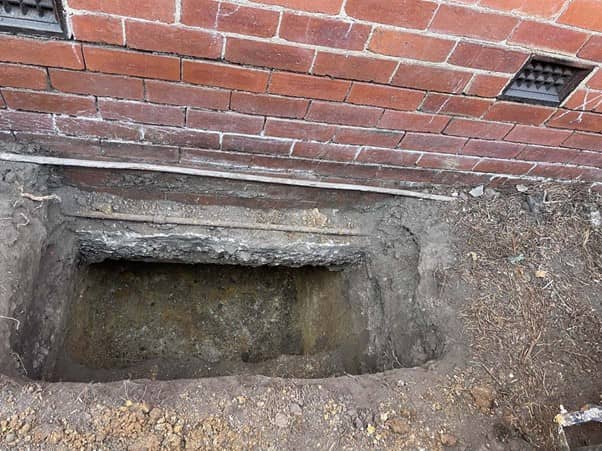
First, let’s discuss what underpinning is.
Cracking, misaligned doors, and uneven floors are common symptoms of footing movement, particularly on reactive clay sites across Melbourne and Victoria. While not every crack means underpinning is required, repeated or progressive movement should be professionally assessed.
Soil Classification and What It Means for Underpinning (AS 2870)
Under AS 2870 (Residential Slabs and Footings), sites are classified based on how much the soil is expected to shrink and swell with moisture changes. This classification directly influences whether underpinning is required, and if so, how deep and how extensive the underpinning needs to be.
- Class A (Stable): Minimal ground movement expected. If underpinning is required, it is usually due to localised issues (e.g., bearing failure, washout, or footing inadequacy) rather than soil reactivity.
- Class S (Slightly reactive): Small seasonal movement. Underpinning may be required where movement is localised or progressive and needs structural support beyond the active zone.
- Class M (Moderately reactive): Moderate seasonal movement. Underpinning may need to be deeper or more widely distributed to stabilise affected sections of the footing system.
- Class H1/H2 (Highly reactive): Higher movement potential. Underpinning designs often require deeper founding and careful detailing to transfer loads to more stable material below the active zone.
- Class E (Extremely reactive): Significant movement potential. Underpinning typically requires an engineered approach, with deeper founding levels and stricter performance expectations.
- Class P (Problem site): Indicates additional site factors such as fill, soft soils, abnormal moisture conditions, tree influence, or other issues. Underpinning solutions are highly site-specific and must be engineered to suit the cause and founding conditions.
Important: Not all houses require the same underpinning. Even within the same suburb, two properties can behave differently due to drainage, trees, fill, footing type, founding depth, and moisture conditions. That’s why underpinning should be based on a proper assessment and, where required, engineer-certified design.
Below are 10 warning signs that may indicate foundation movement and when underpinning may be necessary.
What is Underpinning
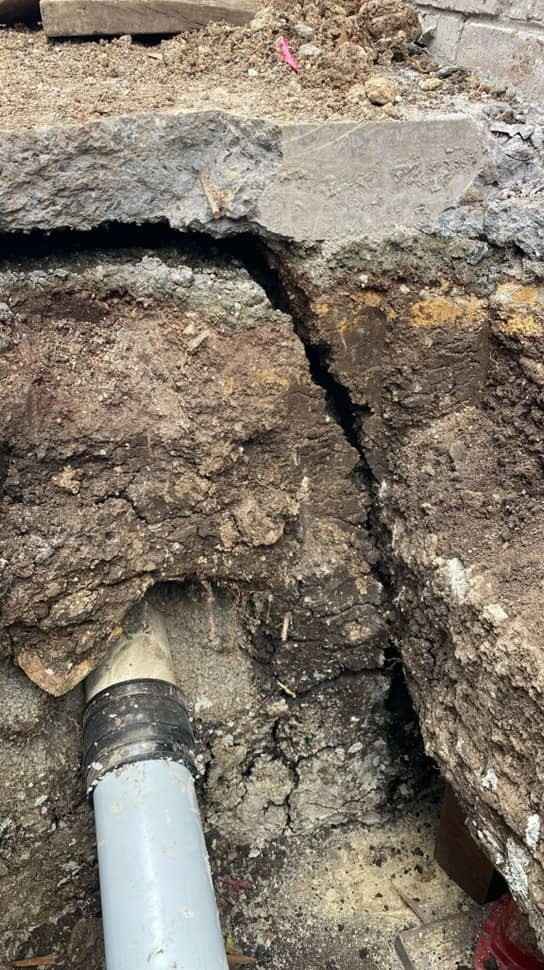
Underpinning is the process of deepening an existing building’s foundations to strengthen and repair them, so the building becomes stable again. It is a structural support process which is required when conditions of the soil beneath a building change, foundations fail or renovations happen which may add weight to the current foundations.
The Top 10 Signs you Need Underpinning to Your Home
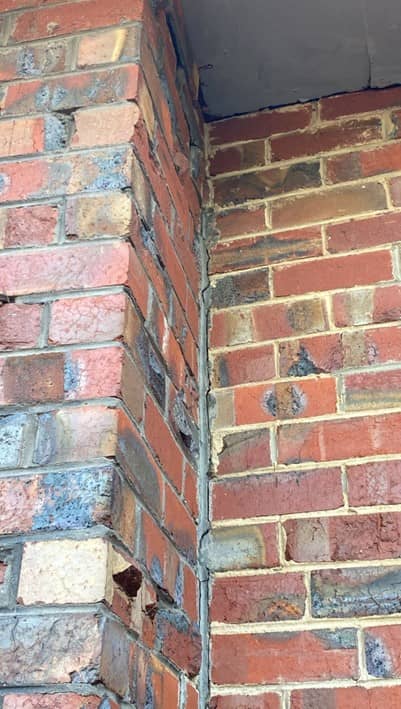
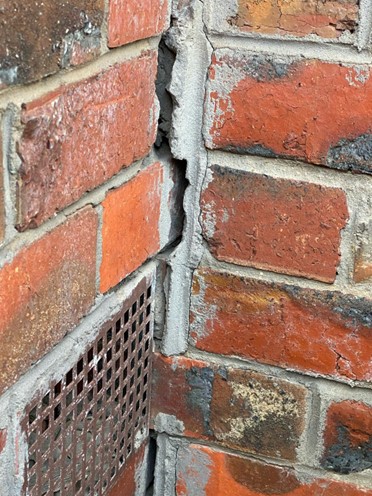
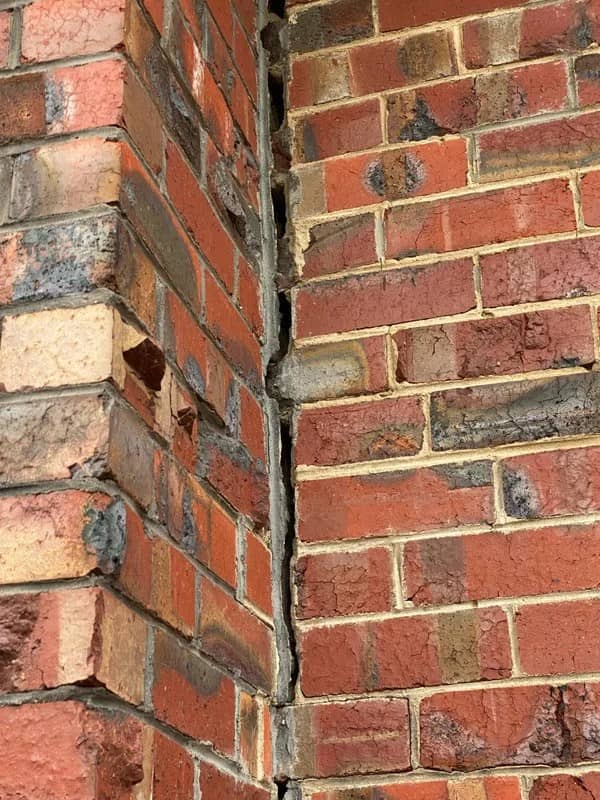
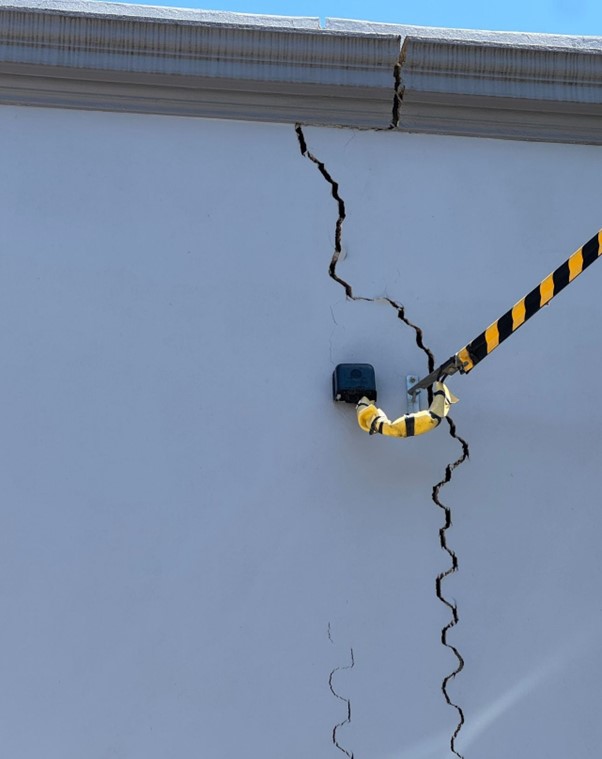
1. Wall Cracks or Stepped Brick Fractures. Cracks can appear in both internal and external walls. Diagonal cracks commonly form in plasterboard or rendered surfaces, often extending from the corners of doors and windows. Stepped cracking typically follows the mortar joints in brickwork, indicating movement through the footing system.
If you notice areas of fresh or mismatched mortar in your brickwork, this can also be a sign that cracking has previously occurred and has been cosmetically repaired. While repointing may improve appearance, it does not address the underlying cause if foundation movement is ongoing.
2. Doors and windows that stick. Interior doors that stick when trying to open, or jam when being closed are a sign that your house has shifted. Same too with windows that don’t quite open and close smoothly. Or alternately, if there are gaps in the frames around doors and windows that could indicate that the house has moved from its original sitting position.
3. Uneven or sloping floors. You may get a sense of uneven floors as you walk on them, or they may be visibly sloping. Some floors even have a bounce to them as you walk upon them. This can be a sign of settlement in your foundations or rotting joists. For hardwood floors, rolling a marble along the floor is an excellent guide to show any unevenness.
4. Cracks in your concrete slab or tiled floor. Just like your walls, your floors can shift as well. Stepped cracks along floor tile lines, or cracks in your concrete slab show signs of shifting upon the foundations and need a good inspection.
5. Bowing walls. Support walls bowing under the pressure of holding the roof up as the foundations start to fall. If you lay your head against the wall and close one eye, you may be able to see the curve of the wall.
6. Gaps between walls and the ceiling or the floor. If there are any gaps where the wall meets the floor, or meets the ceiling, this is a significant sign of structural separation,
7. Separation of Chimney. If you have a brick chimney in your home that is leaning to one side, or it has stepped fractures along the brickline or possibly has pulled away from the wall due to unstable footing, this is a sign your house is shifting. It is quite possible that your chimney may also be subsiding.
8. Moisture and rising water issue. Increased dampness around the perimeter of your home, or inside, can indicate that the water levels beneath your house have changed, making your foundations unstable.
9. Nails popping out of drywall. Nails, or screws, that seem to be popping out of the drywall can be due to pressure on the walls, squeezing the nails and screws outwards.
10. Gaps in exterior trim or cladding. If you see gaps appearing in the fascia, or between the foundation of your home and the cladding , then it is an indication there is movement of the house and foundation.
Noticed one or more of the signs listed above? Now is the time to reach out to a professional. At Vic Metro, we offer specialised house underpinning in Ballarat, Bendigo, Geelong, Shepparton, and Metropolitan Melbourne. Call 03 9102 1452 or get a quote right here online.
What can Cause Your Home to Shift
There are a few reasons why your home may destabilise and show some of the signs listed above.
Soil Subsidence
This is the sinking or further settling of the ground surface by downward movement of subsurface materials. The soil beneath your home sinks more. It is usually caused by moisture loss in clay-based soils, contracting the soil. Alternatively excessive groundwater can cause soils to get waterlogged and sink deeper.
Sinking Foundations
The conditions mentioned above can cause foundations to sink. Other causes can be erosion or when ground shifts beneath a home. It can cause a structure to shift unevenly, causing cracked walls and sticking doorways, as per the list above.
Increased structural loads
If you are renovating your home and adding a second storey, building up, this can place added load pressure to your foundations. If not properly strengthened before you begin, your house can begin to sink into the ground, your foundations not able to handle the extra weight.
What to do if you Notice These Signs
If you notice one or more of the symptoms above, the next step is to contact Vic Metro Underpinning & Restumping. We’ll arrange an on-site inspection to assess the movement, the footing system, and any contributing site conditions.
Our team will complete a detailed structural assessment and, where required, coordinate input from a qualified structural engineer. This allows us to identify the likely cause of movement and determine whether underpinning is necessary, and if so, what method and extent is appropriate for your property.
Once the scope is confirmed, we’ll provide a clear quotation and, upon acceptance, schedule the works to stabilise the affected areas and restore performance of the footing system.
If you’ve noticed any of the warning signs listed in this article, don’t delay seeking advice. Early assessment can reduce the risk of further movement and often helps minimise the overall cost of rectification.
FAQ
Q: What underpinning methods do you use?
We provide multiple underpinning solutions including mass concrete underpinning, screw piling, and bluestone underpinning techniques (where applicable). The chosen method depends on the site conditions, footing system, structural requirements and access. Where appropriate, we can also recommend resin injection for localised void filling or minor lifting, however it is not a substitute for structural underpinning where deepened founding is required.
Q: How do soil conditions affect the underpinning approach?
Different soil types, known as site classes, require different repair strategies. Highly reactive clay soils, for example, are prone to significant movement with moisture changes and may require specialised materials and methods to ensure long-term stability.
Q: Will you assess the soil before beginning work?.
Yes. We carry out a thorough on-site assessment of the footing system and site conditions. Where required, we engage an independent geotechnical engineer to obtain a soil report, which helps confirm site classification, founding conditions and any contributing factors. This allows the underpinning solution to be designed and certified to suit your specific property.
Q: How long does an underpinning project take?
Timeframes vary depending on the extent of the damage and the method used. We work efficiently to complete all projects on time and within budget, with minimal disruption to you.
Q: Is underpinning suitable for both residential and commercial properties?
Yes, foundation problems can affect any type of building. We provide underpinning solutions for both residential homes and commercial properties across Melbourne and Victoria.
Q: What areas do you service?
We service Melbourne and its suburbs, as well as regional areas including Ballarat, Bendigo, Geelong, Shepparton, and Wangaratta.
Q: How do I get started?
Simply contact us for a free structural assessment. We’ll inspect your property, identify the issue and provide a quote for the most suitable solution.
Q: Do you handle permits and paperwork?
Yes, we take care of all necessary permits and paperwork on your behalf, ensuring the project runs smoothly from start to finish.
Q: What accreditations does Vic Metro Underpinning hold?
We are accredited with Master Builders Australia, giving you confidence our work meets recognised industry standards. We are also registered builders with the Victorian Building and Plumbing Commission (BPC). Our team includes licensed and registered builders with extensive underpinning and structural repair experience, and we work alongside qualified structural engineers. Our estimating and project team has a strong civil foundations background, ensuring each solution is technically sound and compliant.
Our experts provide a FREE Structural Assessment and tailored solutions for wall cracks. Protect your home’s value and stability today.
 Contact Us Before It’s Too Late!

What Are Our Clients Saying About Us?

We just had our '50s weatherboard restumped in Ballarat and what an amazing job. Shnai is an amazing communicator and a pleasure to negotiate details with. The 2 gentlemen workers were just that - very respectful of customer and their… more
Nothing but positives for these guys, Shnai and her contractors provide a second to none service with Shnai being on top of all steps of the process and answering any questions that came up. The group of guys she has… more
I can't thank the team enough for quick turn around whilst I'm preparing to renovate. Shnai was a great happy with all the recommendations provided.
Shnai and the team have been brilliant to work with, and went above and beyond to answer all of my questions and provide great advice on my restumping project. Shnai was very professional and understanding of my concerns, and I… more
Shnai and the professional stumper were both absolutely great. They organised a comprehensive assessment of the property at very short notice. They explained the issues clearly and thoroughly. Very professional.
Thank you for assisting us during our difficult journey. We had a water damage from our water tank which caused us a lot of issues. Shani helped us with the whole process. To the extent of liaising with our insurance… more
The Vic Metro team underpinned my house in Maribynong. They did an excellent job; a professional, efficient and effective team. Was highly impressed with their work and work ethic.
Thank you, Vic Metro team, for helping with our property's restumping. They were incredibly helpful and managed to complete everything within the promised time. Will definitely be recommending to others!!!
Thank you for assisting us with our property. We appreciate you fitting us in such short notice. Shnai was amazing to deal with.
Want to thank all the team at Vic metro for the great job they did. Special mention to Shnai for always answering all my questions and always getting back to me. Great crew who know what they are doing, thanks… more
